Welding steel, aluminum and stainless in Utah
Each metal behaves differently under the arc. Here is how we approach the three we weld every week.

We sort our work by metal because the metal decides almost everything that follows: which process we pick, how we prepare the joint, which tools may touch it and how the finished weld will look. A bracket in mild steel and the same bracket in aluminum are two quite different jobs, even when the drawing is identical.
The table below is the short version of what we tell customers on the phone. Each metal has its own page with the detail, the kinds of parts we weld in it and the questions people ask most.
The three metals side by side
| Metal | Under the arc | Usual process | Preparation | Typical parts |
|---|---|---|---|---|
| Steel | Holds heat, moves little, forgiving on fit-up | MIG, TIG on thin or visible joints | Grind to bright metal, weld in short sections | Brackets, guards, carts, fixtures |
| Aluminum | Draws heat away fast, oxide skin, thin edges melt back | TIG on AC, spool-fed MIG on heavy seams | Solvent wipe and stainless brush right before welding | Frames, plates, covers, prototypes |
| Stainless | Holds heat in one spot, shows it as color | TIG with low heat, back purge where needed | Separate brushes and clamps, tint cleaned after | Enclosures, brackets, tube assemblies |
-
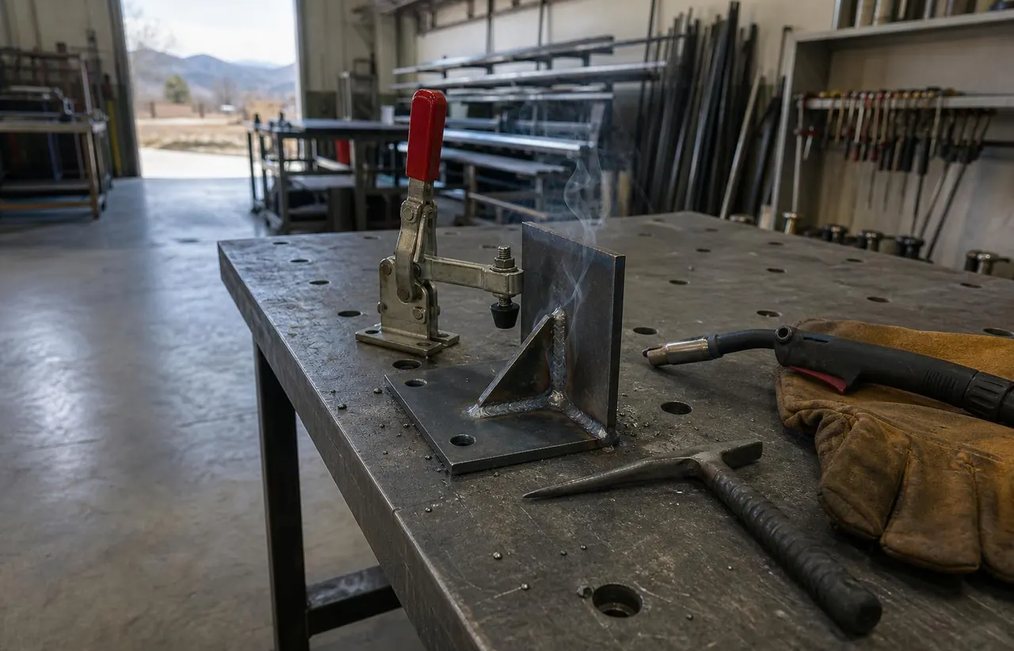
Steel welding
Brackets, guards, carts and fixtures in mild steel, MIG or TIG welded in the shop.Read more -
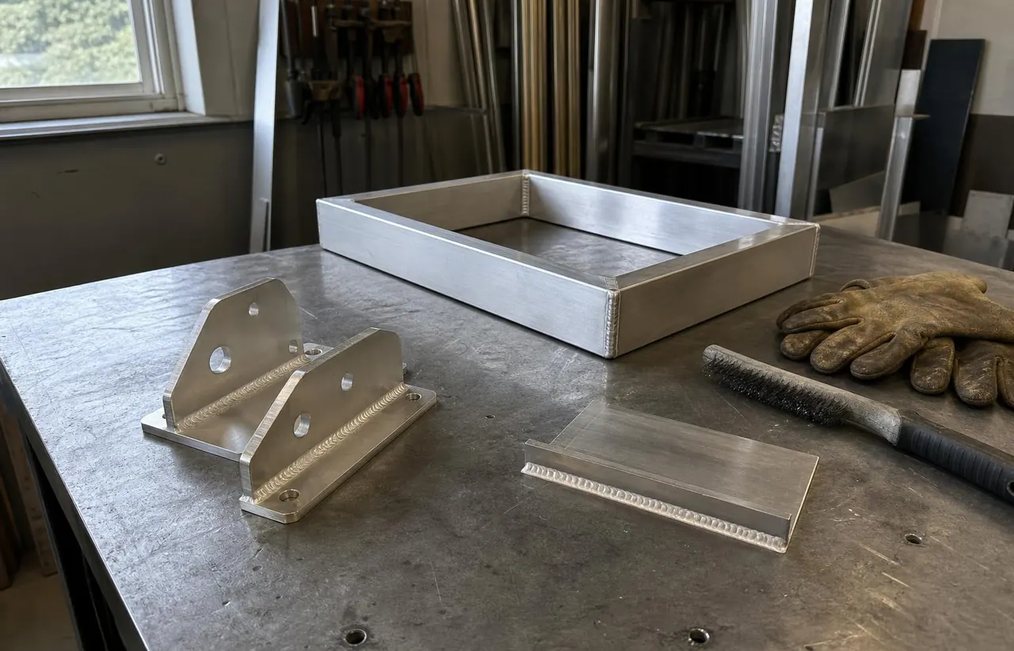
Aluminum welding
Light frames, plates, covers and prototypes, mostly TIG welded on AC.Read more -
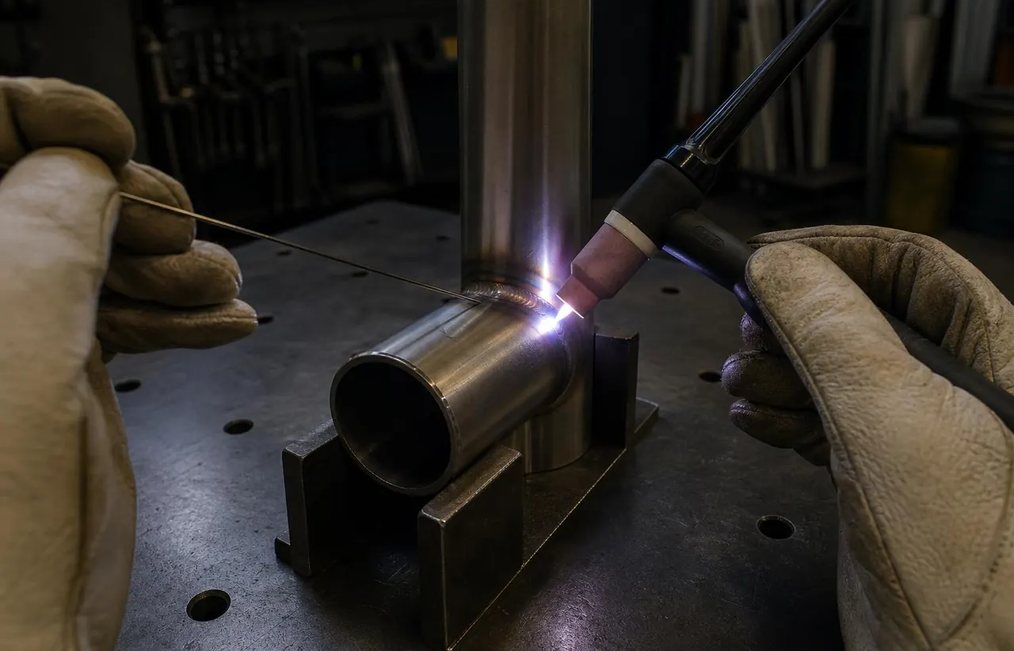
Stainless steel welding
Enclosures, brackets and tube assemblies with low heat and cleaned tint.Read more


Try the dial
The same three metals on the dial. Pick one to see what we reach for and what we watch.
Steel
- How it behaves
- Holds heat and moves little. It forgives a loose fit-up, but a long seam run in one pass will still pull the part out of line.
- What we reach for
- MIG for most seams and thicker sections. TIG on thin sheet and joints that will be seen.
- What we watch
- Mill scale and grease. We grind the joint to bright metal and weld in short, planned sections.
- Typical parts
- Brackets, machine guards, carts, fixtures and small equipment frames.
Aluminum
- How it behaves
- Pulls heat away fast and hides a skin of oxide that melts far above the metal under it. A thin edge can melt back with little warning.
- What we reach for
- TIG on AC for most parts, because it cleans the oxide as it welds. MIG with a spool-fed torch on heavier, longer seams.
- What we watch
- Heat that builds as the part warms. We tack generously and change the welding order as the part heats up.
- Typical parts
- Light frames, mounting plates, covers, trays and prototype parts.
Stainless
- How it behaves
- Keeps heat in one spot and shows it plainly as color beside the weld. Picks up rust from any tool that has touched plain steel.
- What we reach for
- TIG with low heat input. Argon back purge on tube and closed parts where the inside of the joint matters.
- What we watch
- Heat tint and stray steel dust. Stainless gets its own brushes, discs and clamps, and the tint is cleaned to the agreed finish.
- Typical parts
- Enclosures, wash-down brackets, tube assemblies and display pieces.
Parts that mix metals
Some parts combine metals: stainless tabs on a steel frame, or steel studs in an aluminum plate. Steel and stainless can be welded together with the right filler. Aluminum cannot be welded to steel by ordinary means, so those parts are joined with fasteners or redesigned. We will point this out when we read the drawing, before anything is quoted.
Not sure which metal to use?
Tell us what the part has to do, where it lives and how it will be finished. Weight, moisture, appearance and the number of parts all play a part in the choice. We will suggest a metal and explain the trade-off in plain words, and you decide.
Have a part in mind?
Tell us the metal if you know it, or what the part has to do if you do not. We will suggest an approach in the quote.